We have written many articles on fitting the horse and not so much on fitting the rider. I had fully intended to post a different article that I had written but I have had a lot of questions recently on what is considered to be good fit for the rider.
Many people go by the age old standard that one’s backside should be one hand from the cantle. That can be a good starting point but with all the variables involved, it is not as simple as that. The most important factor to consider is if the rider feels neutral in the saddle. If someone were to pull you up by a string to straighten you out and then slowly lower you right in the center of the saddle, would you feel in balance? This is assuming that the saddle is balanced on the horse in the first place.
Because there are so many options to consider in fit I will break the article down into smaller bits and also briefly cover how the different pieces and parts affect the fit of the rider.
Seat size
When we judge what seat size to send or recommend, we consider the height and weight of the rider and get a general idea. However, some riders have an extremely long thigh bone, or a long torso and shorter legs so details make a difference. A smaller person with a very long thigh bone may actually need a little bit bigger seat size to accommodate a saddle that has a straighter flap orientation.
Depth of seat
Generally speaking, the deeper the seat, the more one may have to go up a seat size. The depth of seat is determined by the height of the cantle and the height of the pommel. If one is used to riding in a 17.5 seat with a lower pommel and moderate depth and then chooses a saddle with a more dramatic rise of the pommel and a higher cantle, the seat size will feel more snug. Conversely, if you are used to a very deep seat and switch to a very open seat, you may find it hard to find your balance or the sweet spot of the saddle.
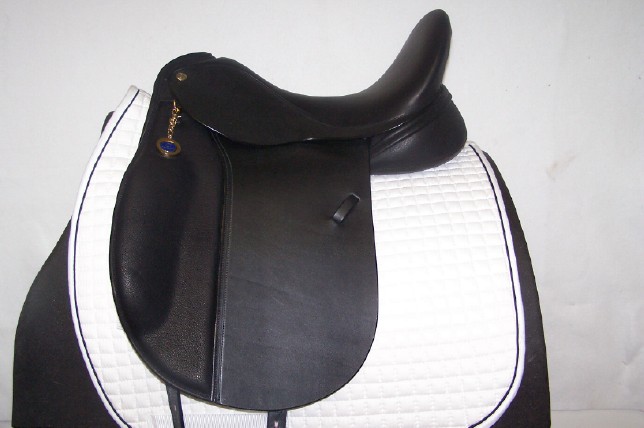
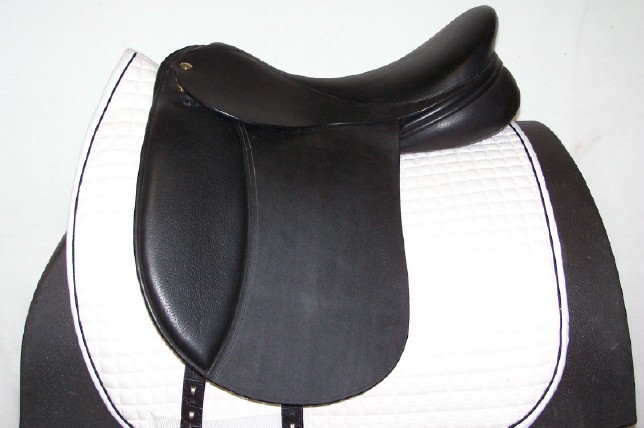
One issue we run into occasionally is the larger rider on the shorter backed horse. If this person picks a very deep saddle to accommodate the back, they might find that they are just too squished whereas a more open seat can be a shorter length but afford more space for the rider. Additionally, some seats run small so please don’t be offended by seat size suggestions. It is not a commentary on your weight!
Twist
The twist, which has been touched on in previous articles, is a very personal thing. It needs to be what works for your body shape and that has to do with how your hips fall from the sockets and their angle, (another previous article). If the twist is too narrow, you will find the ride painful and if it is too wide you may try to compensate by moving your thighs forward to alleviate the cramping hips! Be forewarned though; if you have an ungodly wide horse that needs a very wide hoop tree, chances are you should expect a wider twist. Ideally, your legs should be able to drape comfortably around your horse.
Flap Options
Flaps for most of the different types disciplines come in several different shapes. For dressage saddles, the flaps are fairly straight but if you look closely, some have a more forward orientation and if you are ordering a new saddle, some companies can attach the flap in a more forward position. For someone with a very long thigh or a hip issue, this can be quite helpful.


For jump saddles, you would like your knee to hit just behind the edge of the flap about an inch give or take so that you feel the support and are not searching for the edge of the flap.Make sure that when you are trying the saddle, your leathers are at the length you use when jumping. We can order a saddle with a more forward flap which we determine from where your knee hits the flap referencing the hands on the face of a clock. If you are petite or have a short thigh, we can order a straighter flap.


The length of the flap is also important. You must be able to get your leg on the horse and if your flap is too long you may have trouble trying to do this. If it is too short, you run the risk of catching your boot tops.
Blocks
Blocks come in many shapes, widths and lengths. They can be on the outside of the saddle or under the flap. They can be long, short, fat, thin, high, and repositionable. Wherever they are, they should aid and not interfere with your riding and comfort. If your knee bumps into the block or your thigh hits the jump block in an uncomfortable way, then it is not the right fit. They are there to offer support and not hinder your position. Velcro blocks can often be adjusted to be somewhat accommodating and some manufacturers allow the option of ordering velcro blocks or different size blocks. If you have a very long thigh but don’t ride with a straight leg in a dressage saddle then consider a block that is angled or anatomically shaped.
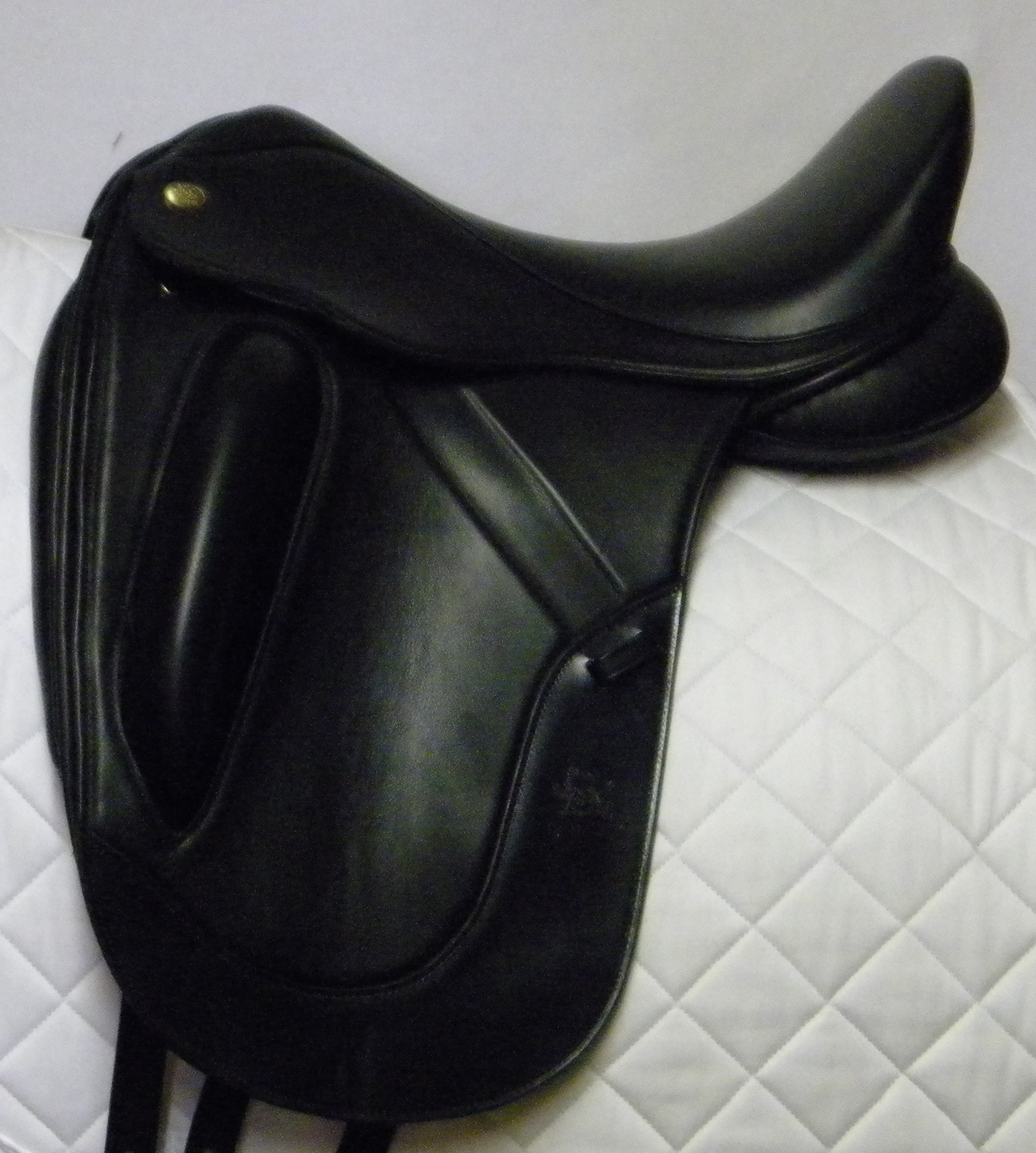

There is much to consider when trying saddles and so many possibilites to help you find a good match and this is just the tip of the iceberg. Knowing what is out there and available is helpful but the right saddle really has to be a decent fit for both horse and human!
2 Responses to “Fitting the Human”
Lorna Gillhespey
Hi Jay, Do you have any view on fitting a horse or pony which will only take a 16 inch tree when the client needs a 17.5 to 18 inch seat to accommodate the riders bottom and length of thigh?
Jay McGarry
I do run into that sometimes. I do think people should consider that potential problem when horse shopping. That being said, there are some saddle companies that offer a saddle/panel options such as a 17.5″ seat with a 17″ panel. Other helpful solutions would be a more open seat, less steep pommel/cantle rise, forward flap and minimal block. Those all add room for the rider. Those options can be available on dressage and jump saddles depending on the saddle company.
Open seats and minimal blocks are not uncommon bu the other options frequently require being ordered on a new saddle.